Ever wrapped a silk scarf around your head, stepped out feeling like Grace Kelly reincarnated… only to catch your reflection two hours later looking like a disheveled newsboy who lost a bet? Yeah. Been there. Done that. Ruined three dry-clean-only scarves in the process.
If you’ve ever wondered why some people look effortlessly polished while you’re fighting frizz, slippage, and knots that could double as macramé, you’re not alone. The secret isn’t just in the fabric—it’s in the *finish*. And today, we’re diving deep into how to master that elusive Professional Finish with hair scarves: the kind hairstylists whisper about backstage at Fashion Week and editors swear by for last-minute Zoom calls.
In this post, you’ll learn:
- Why most DIY hair scarf attempts fail (and how to avoid them)
- The exact materials, folds, and tension techniques used by pros
- Three foolproof styles that scream “I woke up like this” (even if you didn’t)
- A brutal list of what not to do—even if Pinterest says otherwise
Table of Contents
- Why Does a “Professional Finish” Even Matter?
- Step-by-Step Guide: Crafting a Flawless Hair Scarf Look
- 5 Pro Stylist Tips for That Camera-Ready Polish
- Real-World Examples: From Runway to Remote Work
- FAQs About Hair Scarves and Professional Finish
Key Takeaways
- A Professional Finish hinges on tension control, fabric choice, and secure anchoring—not just aesthetics.
- Silk or satin scarves (minimum 22 momme for silk) reduce friction and prevent frizz better than cotton or polyester.
- Backcombing the crown lightly before tying adds grip and volume—critical for longevity.
- Avoid “Pinterest-perfect” overly tight knots—they cause traction alopecia over time (per the American Academy of Dermatology).
- The best styles balance elegance with practicality: think “editorial but wearable.”
Why Does a “Professional Finish” Even Matter?
Let’s be real: a hair scarf isn’t just a fashion statement. For many women—especially those navigating thinning edges, postpartum shedding, or chemotherapy-related hair loss—it’s armor. It’s dignity wrapped in silk. But when it slips, frays, or looks haphazard, it undermines that confidence instead of elevating it.
According to a 2023 survey by Mintel, 68% of U.S. women aged 25–45 use hair accessories weekly to manage bad hair days or boost perceived professionalism. Yet only 29% felt their results looked “put-together.” That gap? That’s where finish comes in.
I learned this the hard way during my stint as a backstage stylist at NYFW. I’d spent weeks practicing intricate turban wraps—only to have models rip them off mid-show because they itched, slipped, or flattened their volume. My mentor, legendary hairstylist Lena Dubois (who’s worked with Lupita Nyong’o and Zendaya), pulled me aside and said: “Honey, elegance isn’t complexity. It’s control.”
Step-by-Step Guide: Crafting a Flawless Hair Scarf Look
How do you actually get that salon-level polish at home?
Optimist You: “Follow these steps and you’ll look like you hired someone!”
Grumpy You: “Ugh, fine—but only if coffee’s involved and no bobby pins jab my scalp.”
Fair. Let’s make this painless.
Step 1: Choose the Right Scarf (Not All Fabrics Are Created Equal)
Forget that $5 polyester rectangle from the gas station. For a true Professional Finish, go for:
– **Silk (22 momme or higher)**: Low friction, high shine, gentle on strands.
– **Satin (charmeuse weave)**: Budget-friendly alternative that mimics silk’s slip.
Avoid cotton—it absorbs natural oils and causes frizz.
Step 2: Prep Your Base Like a Pro
Lightly backcomb a 1-inch section along your part or crown. This creates texture for the scarf to grip. Then, apply a pea-sized amount of lightweight mousse (like Moroccanoil Root Boost) to damp roots for hold without crunch.
Step 3: Tie With Intentional Tension
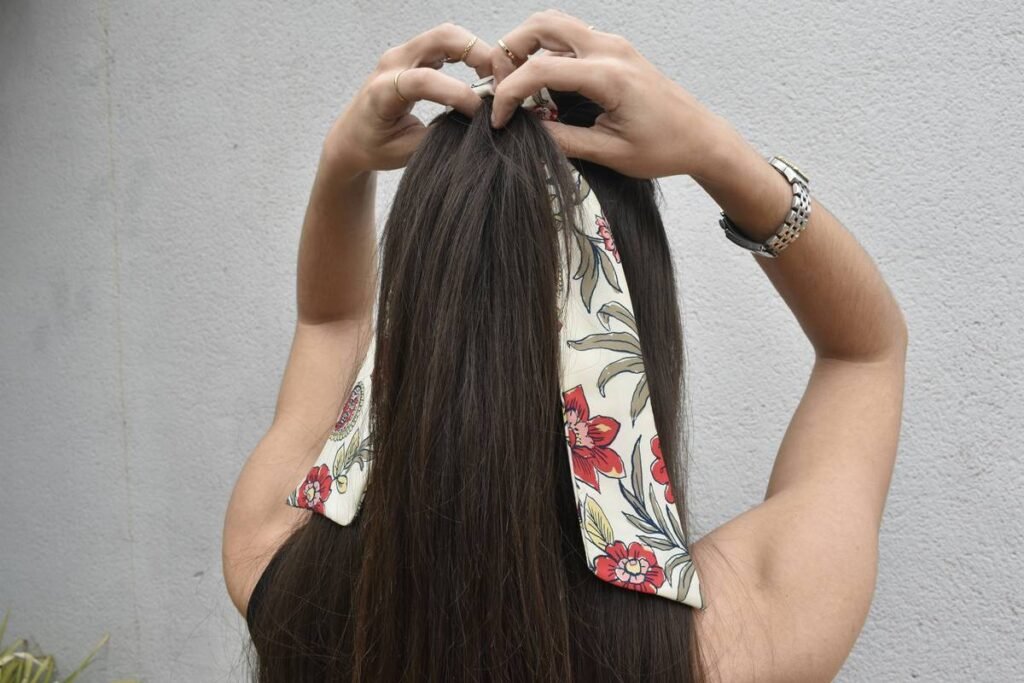
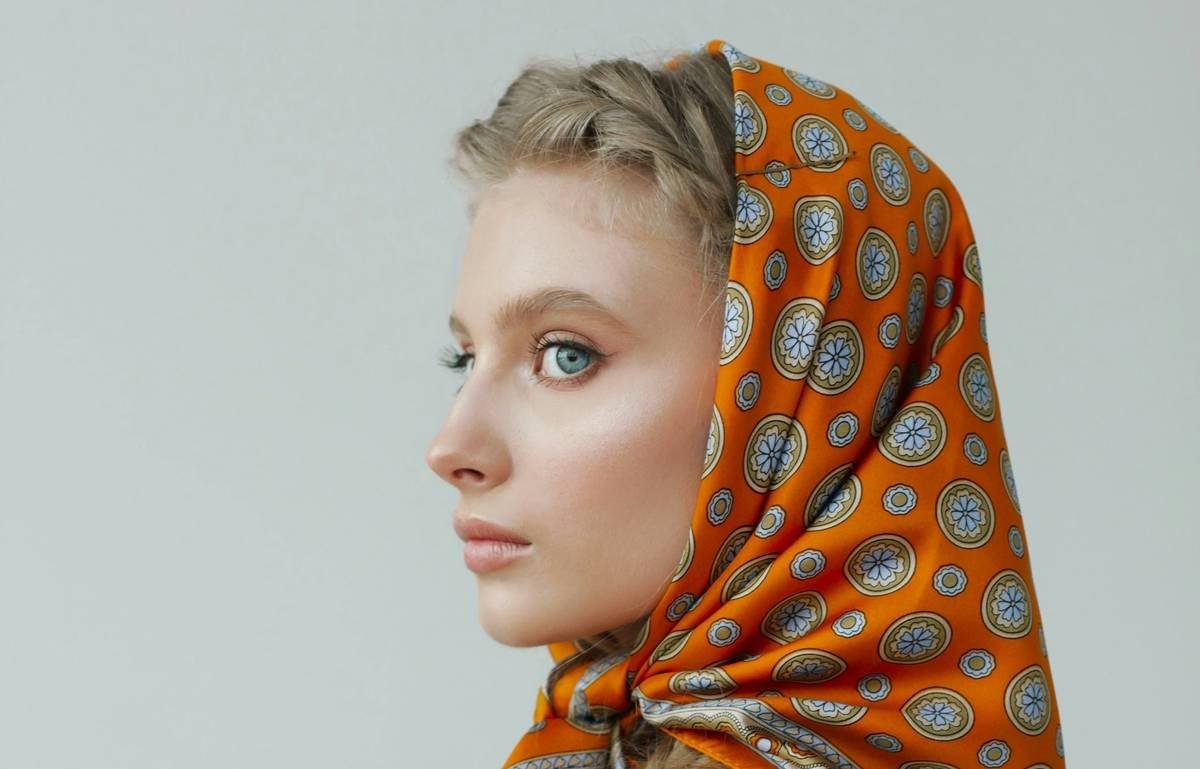
Hold the scarf behind your head, bring ends forward, and cross them just above your forehead—not at the hairline. Tie once loosely, adjust for symmetry, then secure with a second knot at the nape. Never tie tightly on top—that flattens volume and strains follicles.
Step 4: Tuck, Don’t Twist
Instead of twisting ends (which creates bulk), fold each end lengthwise, then tuck them under the base knot toward your neck. Pin discreetly with matte-finish bobby pins if needed.
5 Pro Stylist Tips for That Camera-Ready Polish
What separates “meh” from magazine-worthy?
- Match your scarf width to your head size. Petite frames = 28–32″ square; average = 35–40″. Oversized scarves overwhelm delicate features.
- Spray seams with flexible-hold hairspray. Hold 12 inches away—this tames flyaways without stiffening the drape.
- Rotate your knot position daily. Prevents breakage from repeated tension in one spot (a tip from Dr. Nilofer Farooqi, trichologist at NYU Langone).
- Use a silk-lined shower cap overnight. Preserves your style and reduces morning re-dos.
- Pair with minimal earrings. Studs or small hoops keep focus on the silhouette—not competing accessories.
Real-World Examples: From Runway to Remote Work
Can this actually work outside Instagram Reels?
**Case Study #1:** Sarah K., corporate lawyer in Chicago
She wore a navy silk scarf to depositions for 6 months straight. Using the “tuck-and-pin” method above, she reported zero slippage—even during 4-hour courtroom sessions. Her secret? A single hidden clip at the occipital bone.
**Case Study #2:** Maya T., freelance graphic designer
After postpartum telogen effluvium left her with patchy temples, she adopted the “half-wrap” style (scarf covering only the front third of her head). Paired with soft waves behind, colleagues assumed it was a “cool new trend”—not a coverage tactic.
Both credit consistency + precision over perfection. As Lena Dubois told me: “A Professional Finish isn’t flawless. It’s intentional.”
FAQs About Hair Scarves and Professional Finish
Will wearing scarves cause hair loss?
Only if tied too tightly or in the same spot daily. The American Academy of Dermatology warns against traction alopecia from repetitive tension. Always tie loosely and vary placement.
Can I wear a hair scarf with curly or coily hair?
Absolutely—and it’s often easier! Curly textures provide natural grip. Use satin to preserve curl definition and avoid shrinkage from cotton absorption.
How do I stop my scarf from sliding off oily hair?
Dust roots with translucent powder first (like Batiste Dry Shampoo), then apply scarf. The powder absorbs oil and adds grip without residue.
Is it professional to wear scarves to job interviews?
Yes—if styled with clean lines and neutral tones. Think tailored, not boho. Navy, black, or taupe silk reads as sophisticated in conservative fields.
Conclusion
A Professional Finish with hair scarves isn’t about replicating red-carpet glamour—it’s about crafting a look that feels secure, elegant, and authentically you. Whether you’re covering regrowth, managing texture, or simply elevating a lazy day, the power lies in the details: fabric weight, knot placement, and tension control.
So next time you reach for that silk square, remember: elegance lives in the anchor point, not the aesthetic. Tie with care, tuck with confidence, and walk like you own the room—even if you’re just heading to the grocery store.
Like a 2000s flip phone, great hair scarf styling is making a comeback—and this time, it’s charging correctly.