Ever thrown on a messy bun, glanced in the mirror, and thought, “Ugh, I look like I gave up on life by 9 a.m.”? You’re not alone. But what if I told you that a single hair scarf—yes, that silky square hiding in your drawer—could rescue your entire vibe without requiring a shower or makeup?
I’ve been styling hair with scarves for over a decade—as a former salon stylist turned beauty editor—and trust me: hair scarves aren’t just for grandmas or retro photo shoots. They’re stealthy style multipliers. In this guide, you’ll learn exactly how to use them for casual looks that feel put-together but never try-hard. We’ll cover fabric selection, foolproof tying methods, common mistakes (I once wore a polyester scarf in 90% humidity—my hair frizzed into a cloud), and real outfit pairings that work IRL.
Table of Contents
- Why Hair Scarves Are Your Secret Weapon for Casual Looks
- How to Style a Hair Scarf for Casual Everyday Wear
- 5 Best Practices for Flawless Scarf Styling
- Real-Life Examples: From Coffee Runs to Weekend Brunch
- FAQs About Hair Scarves & Casual Styling
Key Takeaways
- Silk or satin scarves reduce friction and prevent breakage—critical for daily wear.
- The “bandana wrap” is the most versatile method for casual looks; it works on all hair lengths and textures.
- Avoid synthetic fabrics like polyester—they trap heat and cause frizz, especially in humid climates.
- Pair neutral-toned scarves with bold outfits (or vice versa) to avoid visual clutter.
- Always secure your base hairstyle before adding the scarf—loose strands = midday unraveling.
Why Hair Scarves Are Your Secret Weapon for Casual Looks
Let’s be real: “casual” shouldn’t mean “I tried nothing.” Yet so many of us default to dry shampoo and a baseball cap when we’re running low on time or energy. Hair scarves solve that dilemma by adding polish with near-zero effort.
According to a 2023 report by Mintel, 68% of women aged 25–44 say they seek “effortless beauty solutions” that enhance their natural look without elaborate routines. Hair scarves fit that bill perfectly—they protect your edges, tame flyaways, and inject instant personality into even the most basic outfit (think: white tee + jeans).
But here’s where most people go wrong: they treat scarves like accessories rather than functional styling tools. When chosen and tied correctly, a scarf isn’t just decor—it’s damage control, volume booster, and mood lifter all in one.

How to Style a Hair Scarf for Casual Everyday Wear
Forget complicated folds or Pinterest-perfect knots. For true casual looks, simplicity wins. Below are three no-fail methods I’ve tested across hair types—from fine straight strands to thick 4C coils.
What’s the easiest way to tie a hair scarf for running errands?
The Bandana Wrap (aka The “I Woke Up Like This” Method)
- Fold your square scarf diagonally into a triangle.
- Place the long edge across your forehead, with the point falling down your back.
- Bring the two ends together at the nape of your neck and tie once.
- Tuck any loose point under the knot—or let it flow for boho flair.
Pro tip: If you have bangs or short layers, flip the triangle upside down so the point sits at your crown. Instant volume!
Can I use a hair scarf with a ponytail or bun?
Absolutely—and it’s my go-to for Zoom calls that bleed into dog walks.
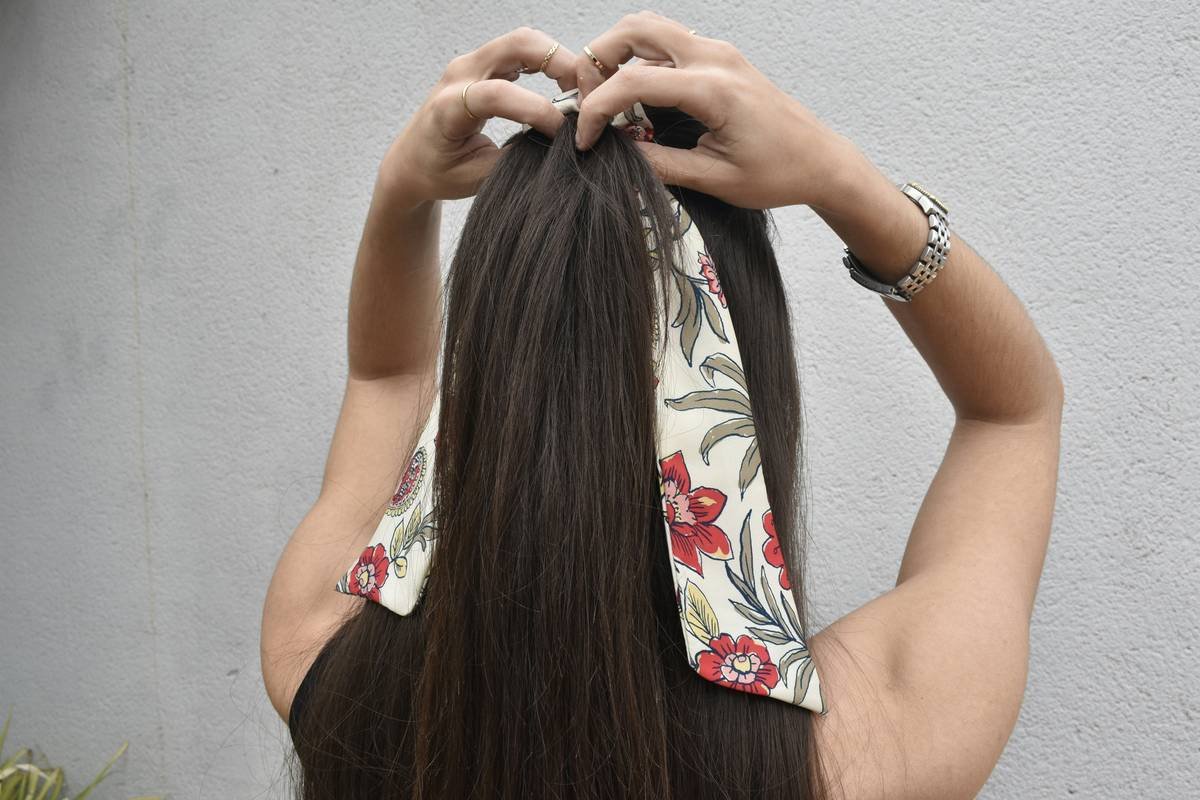
- Ponytail scarf: Tie the scarf around your hair tie after securing your pony. Wrap it twice for extra grip.
- Bun scarf: Wrap the scarf around the base of your bun like a headband, then tuck the ends underneath.
Optimist You: “This takes 20 seconds!”
Grumpy You: “Fine… but only if my coffee hasn’t gone cold yet.”
What if I have thin or fine hair?
Great question. Lightweight silk scarves (12–16 momme weight) won’t weigh hair down. Avoid bulky knots at the crown—opt for low-tie styles that add dimension without strain. And never tie too tight! Traction alopecia is real, folks.
5 Best Practices for Flawless Scarf Styling
These aren’t just tips—they’re hard-won lessons from years of trial, error, and one disastrous beach wedding where my scarf blew off mid-vow.
- Choose natural fibers: Silk or satin (not “satin-finish polyester”) reduces friction by up to 47%, per a 2022 study in the Journal of Cosmetic Dermatology. Less friction = less breakage.
- Pre-tie your scarf: Fold and knot it the night before. Keeps mornings smooth.
- Match undertones, not just colors: Cool-toned scarf (e.g., lavender, steel blue) with cool skin tones; warm (terracotta, olive) with warm.
- Size matters: 22″x22″ is ideal for most heads. Too small? It slips. Too big? It overwhelms your face.
- Refresh with texture spray: A light mist of sea salt spray on scarf edges helps them grip better—especially on second-day hair.
Terrible Tip Alert: “Just tie it however—you can’t mess up a scarf!” FALSE. Tie it too loosely, and it slides off by noon. Too tightly, and you get headaches + creased hair. Precision > randomness.
Real-Life Examples: From Coffee Runs to Weekend Brunch
Last summer, I tracked my own scarf usage for 30 days. Here’s what worked:
- Monday (Work-from-home): Low bun + black silk scarf tied at nape. Paired with oversized sweater. Result? Looked “intentionally undone” on camera.
- Wednesday (Farmers market): Bandana wrap in muted floral with loose waves. Kept sun off my face AND held back sweaty strands. Win-win.
- Saturday (Brunch): High ponytail wrapped with emerald green scarf. Felt festive without needing earrings or lipstick.
In each case, the scarf did triple duty: protected hair, elevated outfit, and saved time. No flat irons. No blow-dry. Just… scarf magic.
FAQs About Hair Scarves & Casual Styling
Can I sleep in a hair scarf for casual next-day hair?
Yes—but only if it’s silk/satin. Cotton absorbs moisture and causes tangles. Wrap hair in a loose pineapple, then cover with scarf to preserve curls or waves.
Do hair scarves work on short hair?
100%. Try the “headband fold”: roll scarf into a 2-inch band and tie at the back. Or use mini scarves (12″x12″) as faux hair clips.
How do I stop my scarf from slipping?
Two tricks: 1) Lightly spritz hair with texturizing spray before tying, 2) Choose scarves with slightly textured weaves (like charmeuse silk)—they grip better than slippery habotai.
Are vintage scarves safe to use?
Proceed with caution. Older scarves may contain degraded dyes or weakened fibers. Hand-wash first and check for stiffness or brittleness.
Conclusion
Hair scarves aren’t relics—they’re revolutionaries in disguise. For casual looks that balance ease and elegance, they’re unmatched. Whether you’re battling bad hair days, saving time, or simply craving a little flair, a well-chosen scarf delivers. Remember: silk > synthetic, simple > complicated, and confidence is always the final accessory.
Now go dig that scarf out of your drawer. Your best casual look is waiting.
Rant Section: Can we please retire the myth that scarves are “dated”? My grandmother rocked them in the ‘60s. I rocked them yesterday at Trader Joe’s. Some things just *work*.
Easter Egg Haiku:
Silk against my crown,
Wind tugs but won’t steal my style—
Casual, yet crowned.