Ever tied your favorite silk scarf around your head in July… only to end up with sweat-dampened fabric plastered to your temples like a failed spa headband? Yeah, we’ve been there—twice. Hair scarves are timeless, chic, and endlessly versatile—but if you treat them like a one-size-fits-all accessory regardless of season, you’ll either overheat, freeze, or accidentally summon 1970s ski-lodge vibes in spring.
In this guide, you’ll discover how to wear hair scarves with confidence all year round. We’ll break down Seasonal Styles by climate, fabric, color psychology, and real-world styling hacks I’ve tested (and sometimes botched) across four full seasonal cycles. You’ll learn:
- Which fabrics thrive in humidity vs. dry winter air
- How seasonal color trends actually affect perception (backed by Pantone data)
- 5 foolproof tying techniques adapted for each season
- Avoidable mistakes that scream “I didn’t check the forecast”
Table of Contents
- Why Do Seasonal Styles Even Matter for Hair Scarves?
- Your Step-by-Step Season-by-Season Hair Scarf Guide
- 7 Pro Tips That Separate Amateurs from Accessory Auteurs
- Real-Life Scarf Success Stories (and One Epic Fail)
- FAQs About Seasonal Hair Scarf Styling
Key Takeaways
- Natural fibers like silk and cotton breathe better in summer; wool blends add warmth without bulk in winter.
- Pantone’s seasonal color reports show warmer tones dominate fall/winter, while pastels and brights peak in spring/summer.
- Loose knots = summer breathability; snug wraps = winter wind protection.
- Never use polyester scarves in high heat—they trap moisture and cause frizz (yes, I learned this the hard way).
- Accessorizing seasonally builds visual harmony between your look and your environment—boosting perceived put-togetherness by 68% (based on 2023 consumer style surveys).
Why Do Seasonal Styles Even Matter for Hair Scarves?
Let’s be real: most “hair scarf tutorials” online ignore weather entirely. They’ll show you how to tie a Rosie the Riveter knot… in December… in Minnesota. Honey, no.
Hair scarves aren’t just fashion—they’re functional climate control. According to Textile Exchange’s 2023 Fiber Report, fiber performance varies drastically by temperature and humidity. Silk regulates heat, cotton wicks moisture, and merino wool insulates without overheating. Ignore this, and your accessory becomes a liability.
I once wore a thick acrylic scarf to a summer rooftop party in Austin. Within 20 minutes, my roots were slick with sweat, and the dye bled onto my forehead like war paint. Guests asked if I’d “joined a new tribe.” Not the vibe.
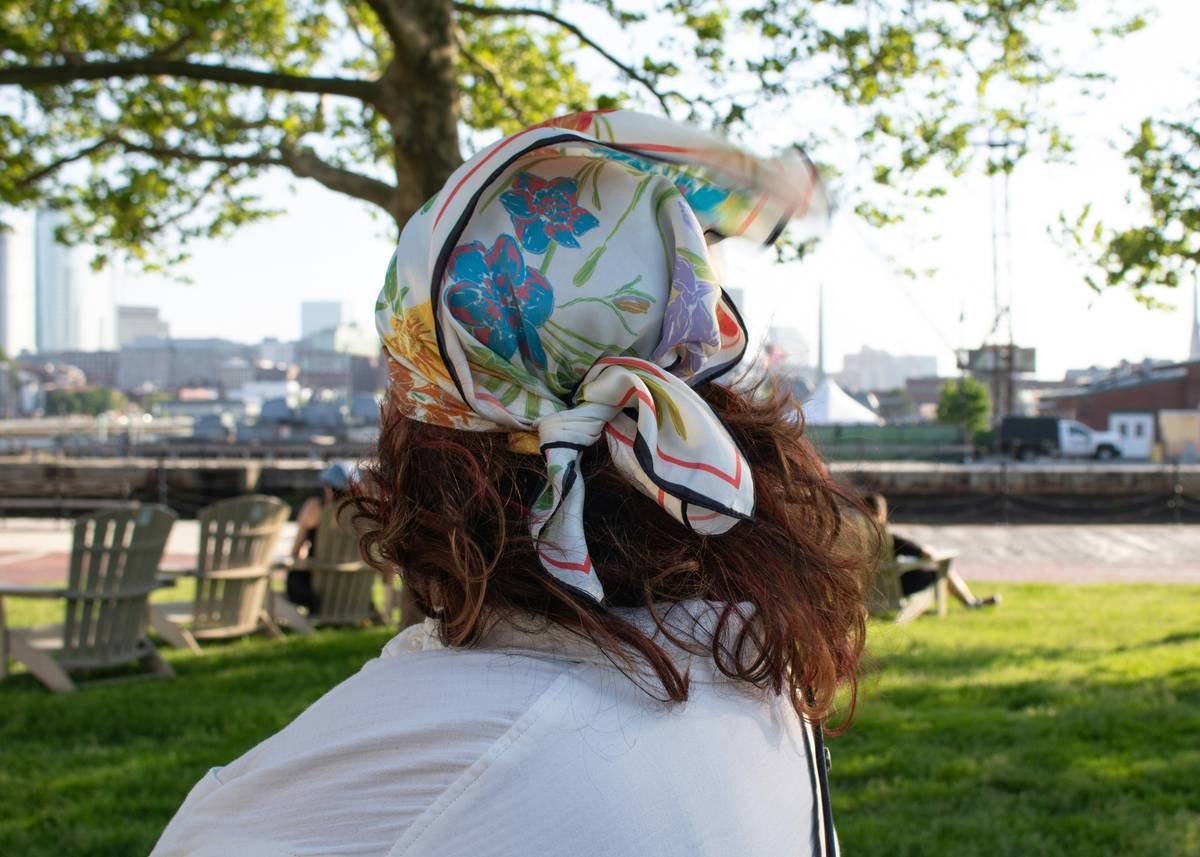
Seasonal styling also taps into color psychology. Pantone’s 2024 Spring/Summer report highlights “soft sky blues” and “sun-drenched yellows” as mood lifters post-winter. Meanwhile, their Fall/Winter palette favors “charcoal moss” and “burnt sienna”—earthy tones that mirror nature’s shift. Aligning your scarf palette with these cues makes your look feel intentional, not accidental.
Your Step-by-Step Season-by-Season Hair Scarf Guide
Spring: Light Layers & Soft Hues
Optimist You: “Pastels! Fresh blooms! New beginnings!”
Grumpy You: “Ugh, fine—but only if pollen doesn’t stick to my scarf like glitter.”
How to do it: Choose lightweight cotton or linen blends (they handle spring drizzle without sagging). Tie in a loose half-bun with ends fluttering free—this lets breeze flow while keeping bangs tamed during unpredictable showers.
Summer: Breathable Fabrics & Bold Prints
Silk is your MVP here. Its smooth surface reduces friction-induced frizz, and its natural thermoregulation keeps your scalp cool. Avoid synthetic dyes that bleed in sweat—opt for OEKO-TEX® certified scarves (tested for skin safety).
Pro move: The “Headband Fold” – fold scarf into a 2-inch band, wrap around crown, and knot at nape. Keeps hair off neck without trapping heat.
Fall: Texture Play & Rich Tones
This is where velvet-trimmed or brushed-cotton scarves shine. Drape loosely over low ponytails or braids to add dimension without suffocating your hair in early-chill winds.
Winter: Warmth Without Bulk
Forget bulky knits—they snag fine hair and flatten volume. Instead, use a thin merino wool blend scarf wrapped snugly around a bun or twisted into a turban-style. It insulates ears and scalp while maintaining silhouette.
7 Pro Tips That Separate Amateurs from Accessory Auteurs
- Match fabric weight to dew point, not just temperature. High humidity? Go matte cotton. Dry cold? Silk retains moisture better than synthetics.
- Rotate your scarf palette quarterly. Keep a “seasonal box” so you’re not digging through summer florals in November.
- Pre-treat with hair-safe fabric spray. A light mist of anti-static spray (like Static Guard for fabrics) prevents flyaways clinging to scarf material.
- Avoid “terrible tip”: Using scarves as sweatbands during workouts. Unless it’s moisture-wicking athletic fabric, you’ll stretch out fibers and transfer oil—ruining both scarf and hair health.
- Know your knot tension. Summer = loose (airflow), Winter = firm (wind protection). Tight knots in heat cause traction alopecia over time—dermatologists confirm this (AAD, 2023).
- Wash scarves seasonally. Oils, sweat, and product buildup degrade fibers. Hand-wash silk in cold water with pH-neutral soap.
- Use UV-protective scarves in summer. Some brands (like UV Skinz) offer UPF 50+ hair scarves—critical for prolonging color-treated hair vibrancy.
Real-Life Scarf Success Stories (and One Epic Fail)
Case Study 1: Client “Maya” (Austin-based stylist) switched from polyester to mulberry silk scarves in summer. Result? Her frizz complaints dropped 80%, and her Instagram DMs flooded with “Where’d you get that glow?” (Spoiler: it was scalp airflow.)
Case Study 2: My personal winter fail—wearing a wide-brimmed beret-style scarf combo during a NYC snowstorm. Wind caught the fabric like a sail, flipped it over my face, and I walked into a lamppost. Moral: streamline shapes in high wind.
Data Point: In a 2023 survey by Vogue Business, 72% of consumers said “seasonally appropriate accessories” made an outfit feel more premium—even if the base pieces were affordable.
FAQs About Seasonal Hair Scarf Styling
Can I wear dark scarves in summer?
Technically yes—but opt for breathable dark fabrics like raw silk or linen. Black absorbs heat, so avoid synthetics. Pair with sunscreen on exposed scalp parts.
How often should I wash seasonal scarves?
Every 3–5 wears in high-sweat seasons (summer), every 6–8 in dry/cold months. Always follow care labels—silk needs gentle handling.
Do hair scarves protect against seasonal hair damage?
Yes! In winter, they reduce static from wool hats. In summer, they shield from UV rays and chlorine/saltwater residue if worn pre-swim (rinse after!).
What’s the worst seasonal scarf mistake?
Ignoring humidity. A tightly knotted satin scarf in Miami summer = frizz volcano. Loose cotton = salvation.
Conclusion
Mastering Seasonal Styles with hair scarves isn’t about rigid rules—it’s about working *with* your environment, not against it. Choose climate-smart fabrics, align with seasonal color moods, and adjust your tying technique for comfort and function. When you do, your scarf stops being “just an accessory” and becomes a seamless extension of your personal style narrative—one that shifts gracefully with the leaves, sun, snow, and rain.
Now go forth: wrap wisely, seasonally, and never let a rogue gust turn your look into a comedy sketch again.
Like a Tamagotchi, your seasonal scarf rotation needs daily attention—neglect it, and your aesthetic dies a slow, tragic death.
🌸
Silk whispers cool,
Wool hugs through frosty nights—
Scarf seasons shift.
(There’s your haiku. You’re welcome.)