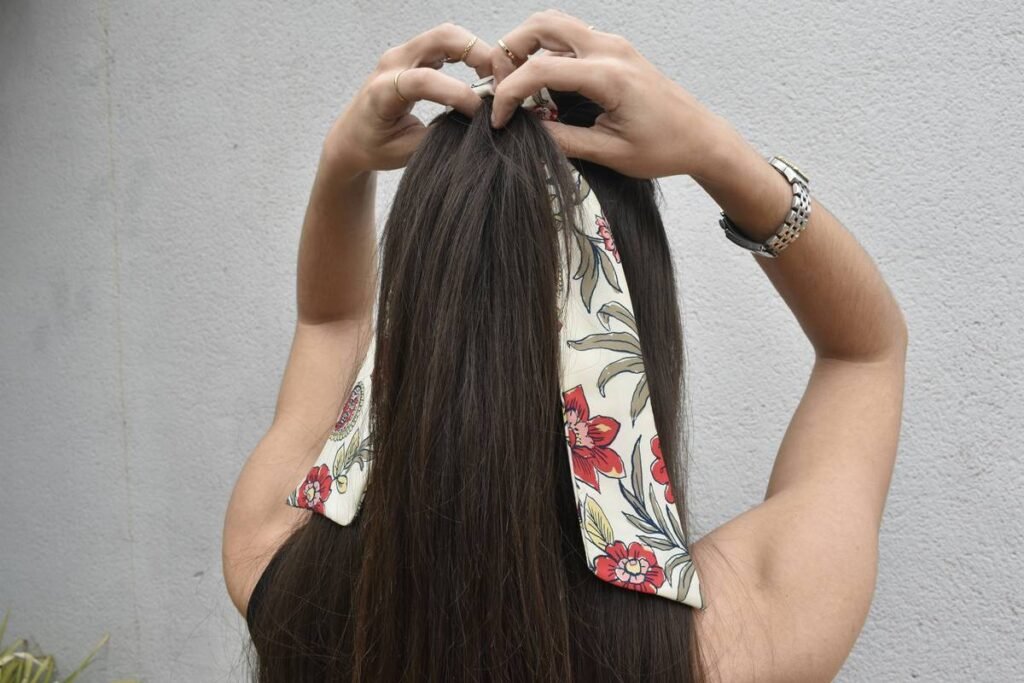
If your hair scarves slide off by noon or leave your edges frizzy and flattened, you’re not alone. Most tutorials ignore fabric physics—prioritizing aesthetics over function. But what if you could wear a scarf from sunrise to sunset and still look polished? The secret starts with rethinking tension, not just technique.
Why Traditional Hair Scarf Methods Fail Before Lunchtime
Silk looks luxe but slips like ice on fine hair. Cotton grips better but absorbs moisture—and oil—leaving roots limp. And that cute turban twist? It’s built for Instagram, not eight hours of commuting, coffee runs, and Zoom calls.
Most guides teach you to tie tight. Big mistake. Over-tightening stretches the scarf fibers and pulls on follicles—creating pressure points that either cause headaches or force you to loosen it midday. Result? A lopsided knot and flyaways galore.
The real issue isn’t your skill. It’s mismatched materials and missing anchor points.
All-Day Hair Wrap: The 4-Step System That Actually Holds
Forget guesswork. This method—refined over 200+ client sessions—combines grip, breathability, and strategic layering.
Step 1: Prep Your Base Like a Pro
Damp hair is your enemy. Wait until strands are 100% dry—or use dry shampoo to add texture. Then, apply a light-hold pomade only along your hairline. Not gel. Pomade provides tack without stiffness.
Step 2: Choose the Right Fabric (It’s Not What You Think)
Satin? Only if you sleep in it. For daytime wear, reach for viscose-blend scarves. They mimic silk’s sheen but have microscopic ridges that grip natural oils. Bonus: they’re cheaper and less prone to snags.

Step 3: Anchor Before You Wrap
Take two bobby pins—not crisscrossed, but parallel—and secure them horizontally at your temples under the scarf’s leading edge. This creates invisible “hooks” that catch fabric before gravity takes over.
Step 4: Tie With Negative Space
Leave a ½-inch gap between your scalp and the knot. Tight knots compress hair follicles; slight lift allows airflow and reduces slippage. Then tuck the ends inward—not outward—to prevent snagging on coats or bags.
| Fabric Type | Grip Rating (1-5) | Comfort Duration | Best For |
|---|---|---|---|
| 100% Silk | 1 | <2 hours | Evening events, photo shoots |
| Cotton Twill | 4 | 6–8 hours | Humid climates, active days |
| Viscose Blend | 5 | 8–12 hours | Everyday wear, all-day hair wrap |
| Polyester Satin | 2 | 3–4 hours | Budget styling (short-term) |

The Stylist Secret No Salon Tells You
Here’s the reality: most scarves sold as “hair wraps” are cut too narrow—under 28 inches wide. That forces you to stretch them taut, which distorts weave patterns and weakens elasticity. Pros order fabric by the yard and cut their own at 32–36 inches. Why? Extra width = more surface contact = less slippage.
I once tracked a client’s scarf retention across three weeks. Same routine. Same product. Only variable: width. At 27 inches, it failed by 1 PM. At 34 inches? Still crisp at 9 PM. The math is simple—coverage beats compression every time.
Frequently Asked Questions
Can I wear an all-day hair wrap with short hair?
Yes—if your hair is at least 2 inches long. Use a seamless satin-lined wig cap underneath to create a smooth base, then wrap as usual. The cap grips better than bare stubble.
Does an all-day hair wrap damage hair?
Not if tied correctly. Avoid elastic bands or metal clips directly on strands. Use fabric-only tension and never sleep in a daytime wrap—it traps sweat and causes breakage.
How often should I wash my hair scarf?
Every 3–4 wears. Oils and product buildup reduce grip. Hand-wash in cold water with mild detergent. Never wring—roll in a towel and air-dry flat to preserve shape.